
Climate-Responsive Architecture in Nairobi: Passive Cooling Basics
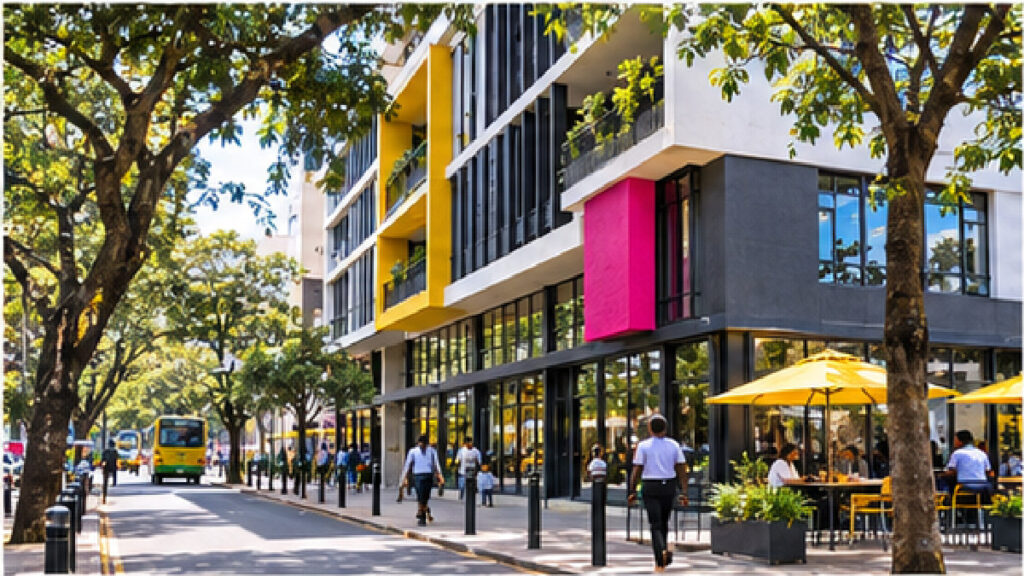
Climate-responsive architecture starts by observing how a site receives sun, shade, wind and rain, then testing design choices that may improve comfort. For Nairobi projects, use local climate information and the course brief rather than applying a generic “tropical design” checklist.
Study sun and shade
Draw a simple site plan and mark the sun direction at different times. Note where people wait, work or sleep and which spaces become exposed. Compare building orientation, verandas, canopies, screens and window positions as design options. Explain the trade-off: deep shade can reduce glare but may also change daylight.
Test ventilation and roof choices
Sketch likely airflow paths and check whether openings connect meaningfully across spaces. Compare high and low openings, shaded windows, roof overhangs and ceiling heights in a section drawing or model. These are design hypotheses; real performance depends on dimensions, materials, wind and operation.
Use evidence and technical review
Consult current Kenya Meteorological Department information for local climate context and follow applicable building rules. If the proposal is more than a studio exercise, ask qualified professionals to review technical performance. Present observations, assumptions and tests separately so the audience can see how you reached a decision.
Use a simple test loop
Pick one room and one comfort question, such as whether the desk receives useful daylight without direct glare. Draw the original, add one design change, and compare the result at two times of day. Note the data you would still need, such as orientation or window size. This turns a broad sustainability slogan into a small, reviewable design investigation.
A useful student exercise
- Write one design question before choosing a solution.
- Compare two alternatives and make the assumptions visible.
- Use feedback to decide what to test next.
Frequently asked questions
Is passive cooling just opening windows?
No. It also involves orientation, shading, room layout, openings, roof and how people use a building.
Can I use Nairobi design strategies in every Kenyan town?
No. Climate and site conditions vary. Use local data and observe the particular place.
Useful links
For course-specific guidance, contact KENCID Admissions about the current programme.