
Sustainable Architecture in Kenya: Climate, Materials and Student Projects
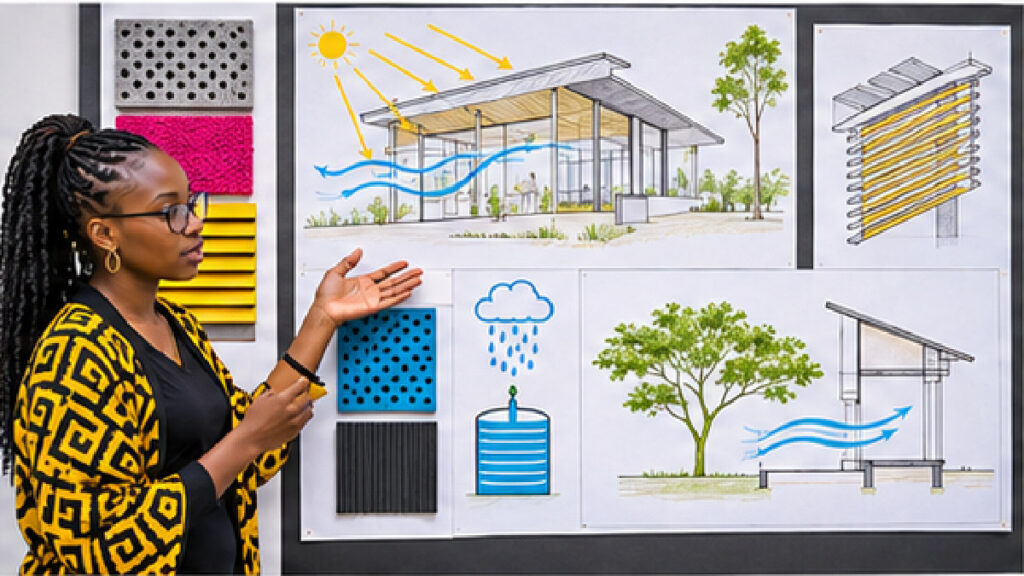
Sustainable architecture is a way of making design decisions with energy, water, materials, comfort and long-term use in view. For a student project in Kenya, begin with the site and the people who use it. Avoid adding “green” features before you understand the problem they are meant to solve.
Read the local conditions
Record sun, shade, wind, rain, noise, neighboring buildings and how people arrive. Ask where heat builds up, where daylight is useful and which spaces need protection from weather. A simple site diagram can turn these observations into design questions.
Test passive choices first
Compare building orientation, window placement, shading, roof form, cross-ventilation and the relationship between indoor and outdoor space. Draw two alternatives and explain how each might affect comfort. Treat these as hypotheses to test with your tutor, not guaranteed performance claims.
Choose materials over the full life of the project
Consider availability, durability, maintenance, construction skills and what happens when a material is repaired or replaced. A locally familiar material is not automatically the best option for every use; compare it against the brief and technical requirements. Make a small sample board and annotate the trade-offs.
Turn one observation into a test
Suppose a room feels hot in the afternoon. Record the time, sun direction, shade and where people sit. Sketch a small shade device or change the opening arrangement, then compare the proposal with the original. State what you expect to improve and what could become worse, such as reduced daylight. That habit of testing trade-offs is more useful than simply labeling a proposal “eco-friendly.”
Before you start
- Write down the task or decision you need to make.
- Use the current course brief or official programme page.
- Ask for clarification before spending money or time.
Frequently asked questions
Is a solar panel enough to make a building sustainable?
No. Energy generation is one element. A student should also consider comfort, demand, water, materials, maintenance and how the building is used.
What is a good sustainable design project for beginners?
Redesign one classroom, waiting area or small home using a site observation, a shade study and two material alternatives.
Useful official links
For course-specific guidance, contact KENCID Admissions and ask about the current programme details.