
Model, pattern and mould: what is the difference?
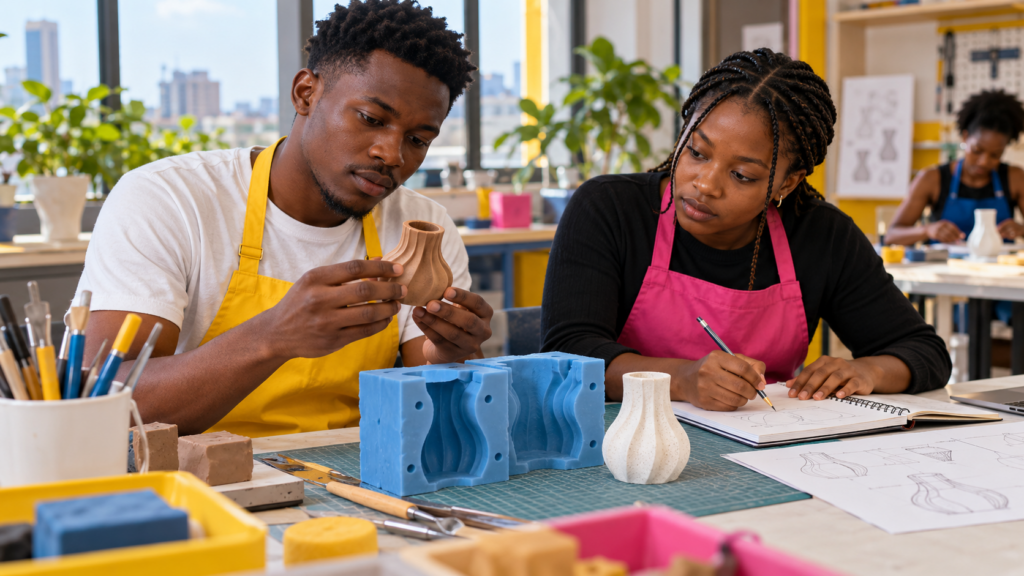
A model helps people judge a form, proportion or idea. It can be a sketch, digital view or physical study, depending on the question. A pattern is a prepared form used to plan or create a repeatable shape. A mould is a tool or cavity that helps form material into a particular shape. The terms can vary by industry, so ask how a workshop uses them.
In a design project, begin with the purpose. Is the model meant to communicate appearance, test size or guide a possible production route? A model does not automatically become a production tool, and a mould does not prove that a product is safe or compliant.
The University of Nairobi’s Product/Industrial Design page describes moving products from concept toward the marketplace. Explore KENCID’s Product Design and Sculpture courses alongside Mould Making, Model Making & Composite Fabrication.
Explore your next step
Explore the Mould Making, Model Making & Composite Fabrication course at KENCID, or browse all KENCID courses. Contact Admissions to confirm current course details before you apply.