
Joining and assembly questions for a sculptural object
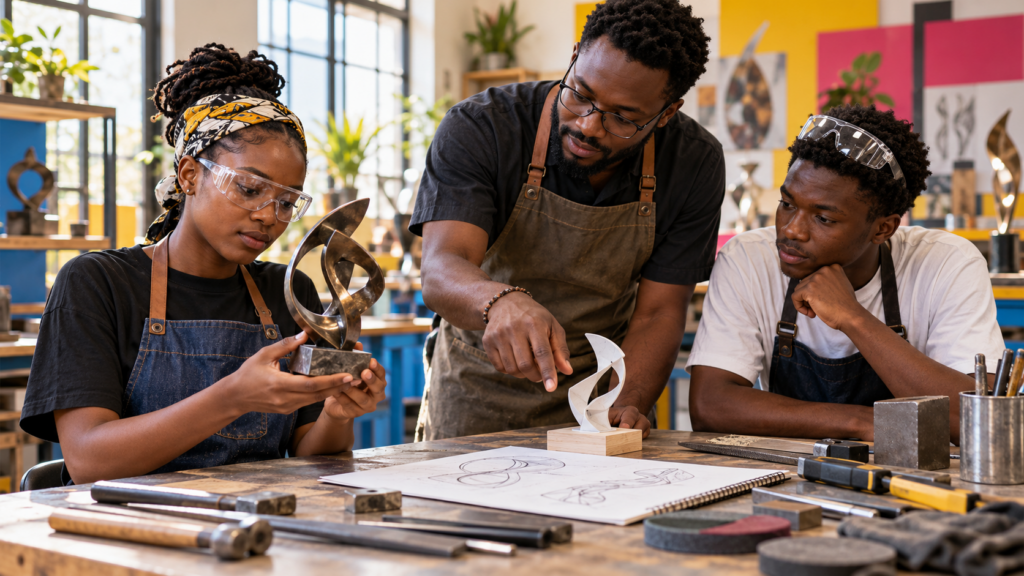
Before you fabricate parts, map how you will assemble the object. Consider its scale, where people will see the connections, whether you need to transport parts separately, how the finish may change and how you will inspect or maintain the piece. Sketch the sequence and check that the assembly suits the material and setting.
The drawing is not a workshop procedure. Joining choices depend on the material, load, equipment and operator competence. Welding, hot work and safety-critical fabrication require approved processes, trained people and the relevant supervision. Structural joints need professional design and review for their intended use.
Explore KENCID’s Sculpture and Fabrication courses, and NITA’s Nairobi technical-training information. Metal Arts & Sculptural Fabrication develops artistic metalwork; it does not certify you for structural welding.
Explore your next step
Explore the Metal Arts & Sculptural Fabrication course at KENCID, or browse all KENCID courses. Contact Admissions to confirm current course details before you apply.